How to Make a Media Kit That Gets You Booked (With an Example Layout)
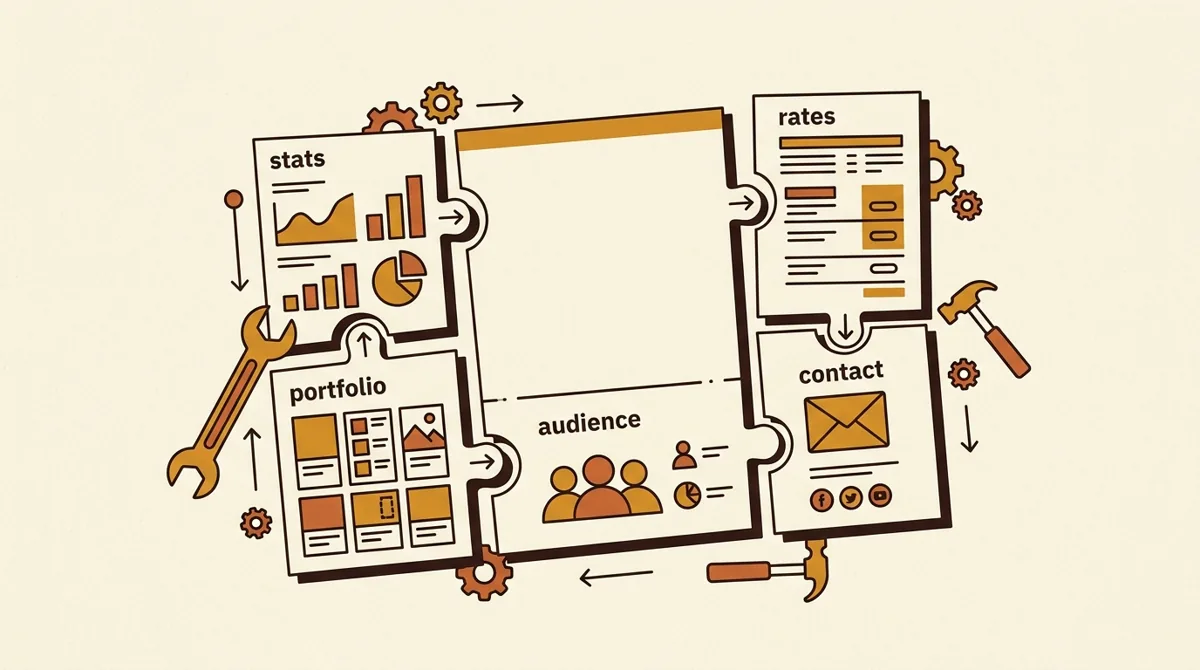
A media kit is a one-to-two page document that tells a brand who your audience is, what you make, and what it costs to work with you. The brands worth working with will ask for one, and having it ready makes you look like a business instead of a hobby. You can build a solid version this afternoon — this guide covers the sections, a copyable one-page layout, and the two numbers brands check first.
| Section | What goes in | Why brands care |
|---|---|---|
| Header | Name, niche in plain words, photo, one line on who you are | Answers "is this audience my customer?" at a glance |
| The numbers | Total reach, per-platform followers, engagement rate | ER is the stat that separates you from bought followers |
| Audience | Top age band, gender split, top countries | A beauty brand wants "70% women 18–34", not just 40k followers |
| What you make | Formats plus 2–3 links to best-performing posts | Shows content that will not embarrass them |
| Past partners | Logos or names — or omit entirely | An honest kit beats a fluffed one |
| Packages and rates | A starting price | Filters time-wasters and signals you have done this before |
| Contact | Email, not your DMs | The fastest path to a reply |
Source: sections as described in this guide.
What is a media kit actually for?
It answers the three questions a brand manager has before they reply to your email: Is this audience my customer? Does this person make content that won't embarrass us? Can I afford them? A good kit answers all three in under 60 seconds of reading. That's the bar. (New to the concept entirely? Start with what a media kit is.)
It is not a brag sheet. The slickest design in the world won't book you if the numbers don't match the brand's customer. Lead with relevance.
Which sections belong in a media kit?
Keep it to one page if you can, two at most. Anything longer gets skimmed and then closed.
- Header — your name/handle, niche in plain words, a clear photo, and one line on who you are. Example: "Maya — skincare for sensitive, acne-prone skin. I test products in real time and show the receipts."
- The numbers — total reach across platforms, follower count per platform, and your engagement rate. Put ER front and center; it's the stat that separates you from buying followers.
- Audience — top age band, gender split, top 2–3 countries or cities. Pull this straight from your analytics tab. A beauty brand wants to know you're 70% women 18–34, not just that you have 40k followers.
- What you make — your formats (Reels, 60-second reviews, GRWM, hauls) and 2–3 links to your best-performing posts. Link the ones with the best watch-through, not just the highest views.
- Past partners — logos or names if you have them. New? Skip this section rather than padding it; an honest kit beats a fluffed one.
- Packages and rates — name a starting price. The number scares off time-wasters and signals you've done this before.
- Contact — email, and the fastest way to reach you. Not your DMs.
What does a good one-page layout look like?
Here's the structure I'd hand a creator starting from zero:
| Section | What goes here |
|---|---|
| Top band | Photo, name, niche tagline, contact email |
| Quick stats row | 95k total reach · 4.8% ER · 72% women 18–34 |
| About (2–3 lines) | Who you serve and why brands trust your recos |
| Platform breakdown | TikTok 58k · IG 31k · YT 6k, with per-platform ER |
| Content samples | 3 thumbnails linking to top posts |
| Packages | Single video $X · 3-video bundle $Y · add-ons listed |
| Past partners | Logos, or omit |
Build it in Canva, Google Slides, even a clean Notion page with a public link. Format matters less than accuracy and ease of reading. A PDF that's easy to attach to an email is the safest default.
Which two numbers do brands check first?
As of 2026, two figures carry more weight than everything else: your engagement rate and your rate card. Brands check ER because it's hard to fake and it predicts whether your posts actually land.
Calculate yours with the engagement rate calculator so the number on your kit matches what a brand will compute themselves. If your ER is strong, make it the biggest stat on the page. If it's modest, lead with audience fit and niche authority instead.
For pricing, don't pull a number from the air. Run your followers, platform, and engagement through the brand deal rate calculator and put the result on the kit as a starting rate. Anchoring with a real figure does two things: it filters out brands offering "exposure," and it makes negotiation start from your number, not theirs.
Do small influencers need a media kit?
Yes — a media kit for small influencers matters more, not less, because under 10k followers you're pitching engagement and audience fit instead of raw reach. Brands book micro-creators for exactly those numbers, so a one-page kit that leads with a strong engagement rate puts you ahead of bigger accounts that show up empty-handed. If part of your offer is UGC — videos the brand posts on its own channels — price that separately with the UGC rate calculator.
What mistakes get a media kit ignored?
- Stale numbers. A kit from four months ago with old follower counts reads as careless. Update it before every pitch season.
- Vanity over relevance. Listing total impressions across 18 months looks impressive and means nothing. Brands want recent, repeatable reach.
- No rate. "Rates available on request" makes a busy brand manager move on. Name a starting price.
- Too long. If your kit needs scrolling past page two, you've lost them.
How do you keep a media kit current?
The best media kit is one you can refresh in ten minutes. Save your layout as a template, then update the stats row, the content samples, and the rate each quarter. Tailor the "about" line slightly per pitch — a fitness kit sent to a supplement brand should read differently than the same kit sent to an apparel brand. Same numbers, sharpened framing.
There's also a way to skip the refresh cycle for most of the kit: pair your PDF with a live public creator profile — effectively the media kit that updates itself. Brands vet you before they reply, and a link like creamate.ai/u/yourhandle answers that vetting with per-platform stats, niche tags, a portfolio, and testimonials that stay current without you re-exporting anything. The PDF still earns its keep — it attaches to emails and forwards cleanly inside a brand's team — so treat this as both/and, not either/or: the live link for verifiable, always-fresh numbers, the PDF for the paper trail. You can create a free profile in a few minutes, and we break down what makes a profile actually win deals in the creator profile that wins brand deals.
If you manage pitches and partnerships in one place, your kit stops being a separate chore and becomes a snapshot you export. Browse the free tools to handle the numbers, and check pricing if you want pitching and deal tracking in one workspace.
FAQ
How many followers do I need before making a media kit?
None, really. Even at 2k–5k followers a tight, niche kit with a strong engagement rate can land gifting and small paid deals. As of 2026, micro-creators often convert better, and brands know it. Build the kit; it makes you look ready.
PDF, Canva link, or Notion page?
A PDF is the safest because it attaches to any email and looks the same on every device. A Canva or Notion link is fine as a backup, but always have a downloadable version for brands who forward kits internally.
How often should I update it?
Every quarter at minimum, and always before a pitching push. Your engagement rate and follower count move, and a current kit signals you treat this seriously.
Should I show my rates or wait for the brand to name a budget?
Show a starting rate on the kit, then ask their budget in the conversation. The starting rate filters out lowballers; asking their budget after lets you negotiate up. You want both anchors working for you.
What if I have no past brand partners yet?
Omit that section entirely. Replace it with one extra content sample or a short line on the audience problem you solve. An honest, partner-free kit beats one padded with "as seen on my own feed."
CreaMate is an AI co-pilot for short-form creators (TikTok/Reels/Shorts) that turns one topic into hooks, scripts, hashtags and cover briefs, and helps small creators price and land brand deals.
FAQ
- What should a creator media kit include?
- One page covering: a header with your name and niche, total reach and per-platform follower counts, your engagement rate, audience demographics, 2–3 links to best-performing content, past partners if any, packages with a starting rate, and a contact email.
- How many followers do you need before making a media kit?
- There is no minimum. Even at 2,000–5,000 followers, a tight niche kit with a strong engagement rate can land gifting and small paid deals — micro-creators often convert better for brands, and having a kit ready signals you treat this as a business.
- What format should a media kit be — PDF, Canva link, or Notion page?
- A PDF is the safest default because it attaches to any email and looks the same on every device. A Canva or Notion link works as a backup, but always keep a downloadable version for brands who forward kits internally. Many creators pair the PDF with a live profile link that stays current on its own.
- How often should you update a media kit?
- Every quarter at minimum, and always before a pitching push. Stale follower counts and old engagement numbers read as careless and undercut trust — or use a live profile link that updates automatically alongside the PDF.
- Should a media kit show rates or wait for the brand's budget?
- Show a starting rate on the kit, then ask the brand's budget in conversation. The starting rate filters out lowballers and time-wasters; asking their budget afterwards lets you negotiate up.
- What if I have no past brand partners yet?
- Omit that section entirely rather than padding it. Replace it with one extra content sample or a short line on the audience problem you solve — an honest kit beats a fluffed one.